The 2025–2026 academic year marked the fifth anniversary of the Consortium of Cybersecurity Clinics—and we have plenty of reasons to celebrate.

Executive Summary
Cybersecurity clinics—higher education-based programs that train students to provide pro bono cybersecurity assistance to organizations with limited resources—have continued to expand around the world. Clinics are a “win-win” as they create valuable real-world learning opportunities for students while delivering vital digital security assistance to nonprofits, municipal governments, school districts, utilities, small businesses, and other community organizations.
The Consortium of Cybersecurity Clinics was established in 2021 to share best practices and support the spread of the clinic model. Thanks to the collaboration of our member clinics, institutional partners, philanthropic and public funders, and higher education leaders, the Consortium has continued to grow and strengthen the clinic model. As we move toward the end of 2026, we are excited to share this summary of our growth and impact from the 2025–2026 academic year. Among the highlights:
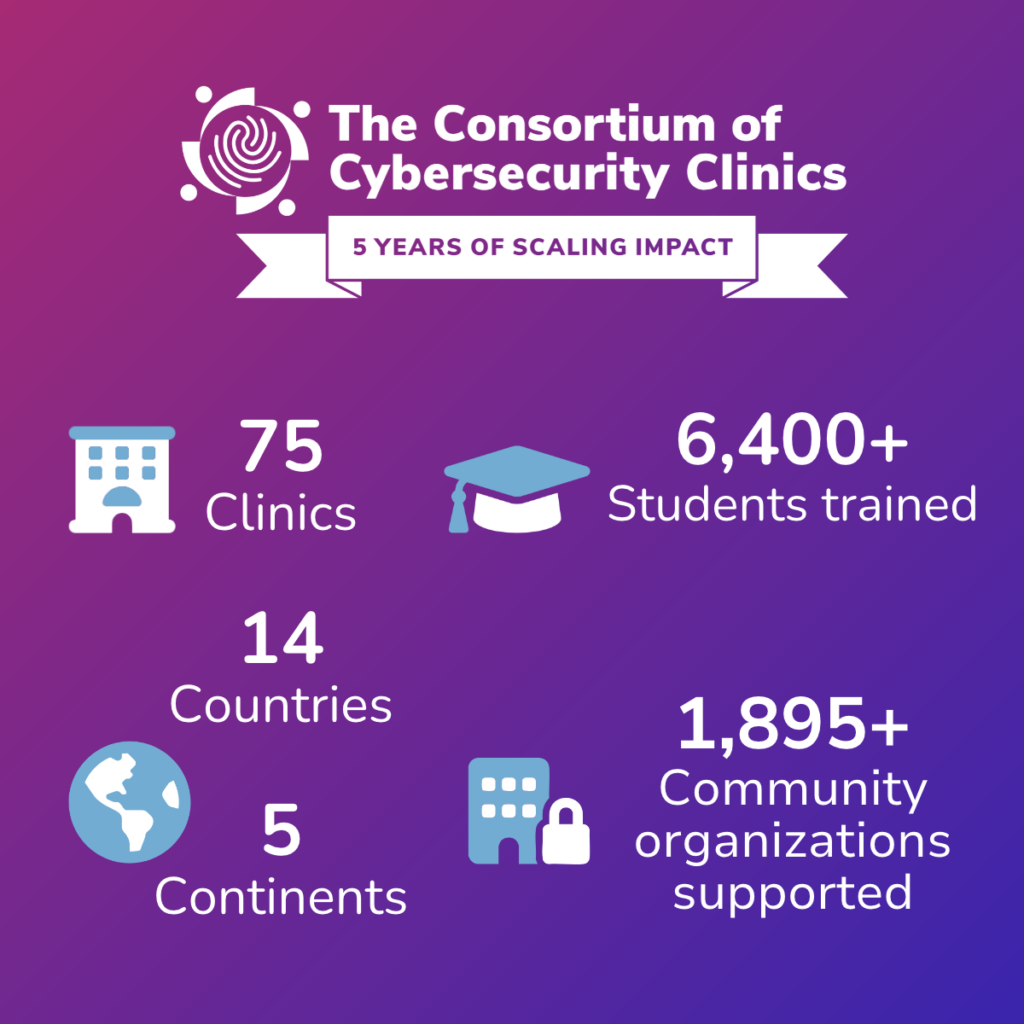
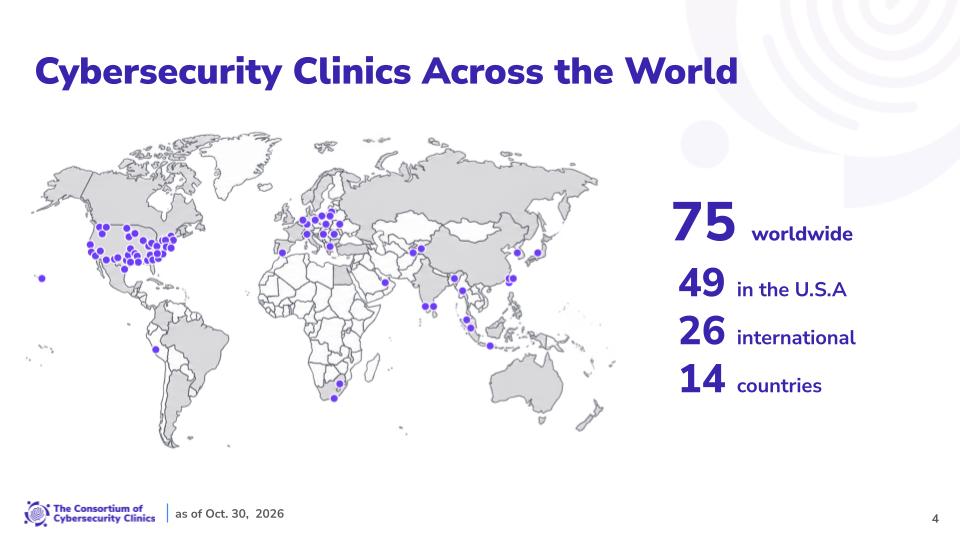
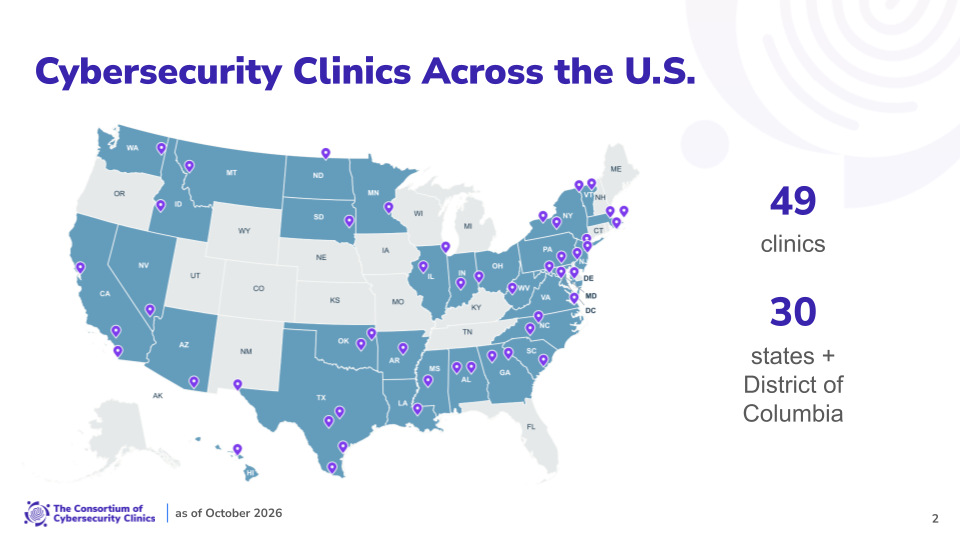
- A Growing Global Alliance: The Consortium now spans 75 clinics across 14 countries on five continents, including 49 clinics in the United States. Over the past year, we have welcomed our first clinic in Latin America, Canada’s first cybersecurity clinic, and new clinics across six countries in the Asia-Pacific region. In the United States, clinics now operate in 30 states plus Washington, D.C., bringing us closer to our goal of having one clinic in every state by 2030.
- Record Student Training: In the 2025–26 academic year alone, 51 clinics trained 2,641 students—more than four times the annual total from two years ago. Cumulatively, member clinics have now trained more than 6,400 students.
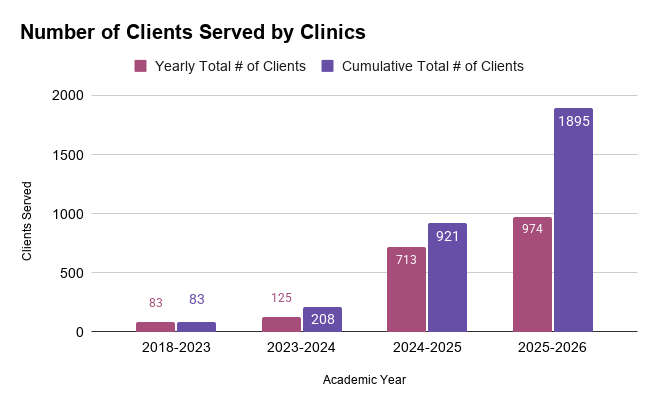
- Doubling Down on Community Defense: Reporting clinics served 974 community organizations in 2025–26, bringing our cumulative total to 1,895 organizations protected. This more than doubles the previous year’s cumulative reach.
- Growing and Diversifying Support for Clinics: Total investment from Google.org surpassed $36 million, joined by major endowments from Craig Newmark Philanthropies, support from Okta for Good, and exciting new state and federal investments—including $4 million from the State of Maryland and grants from NSF, NSA, SBA, and NIST.
What’s Inside This Report
- Preparing a New Generation of Cybersecurity Leaders: How clinic alumni are launching public-interest and industry careers, featuring spotlights from member clinics and their alumni.
- Closing the Defense Gap for Community Organizations: A breakdown of the community organizations that clinics protect.
- An Expanding Global Network: A closer look at our international growth across the Asia-Pacific region and Latin America.
- Exploring New Funding Streams: Details on the philanthropic, state, and federal grants fueling clinic sustainability and AI-cyber integration.
The Consortium and its member clinics have come a long way in our first five years—and we are just getting started.
Preparing a New Generation of Cybersecurity Leaders
Clinic alumni are not just graduating with cybersecurity and professional skills; they are making real contributions to Cyber Civil Defense. Cybersecurity clinics are training a new generation of cybersecurity professionals who are oriented toward public-interest career pathways:
- A graduate from the cybersecurity clinic at Oklahoma’s Northeastern State University now works as a provider of digital security assistance for a tribal organization.
- An alum from DePaul University’s cybersecurity clinic was hired as a part-time consultant for the nonprofit client his clinic team worked with.
- A graduate from the University of California, Berkeley Cybersecurity Clinic started a business providing digital security assistance to nonprofits.
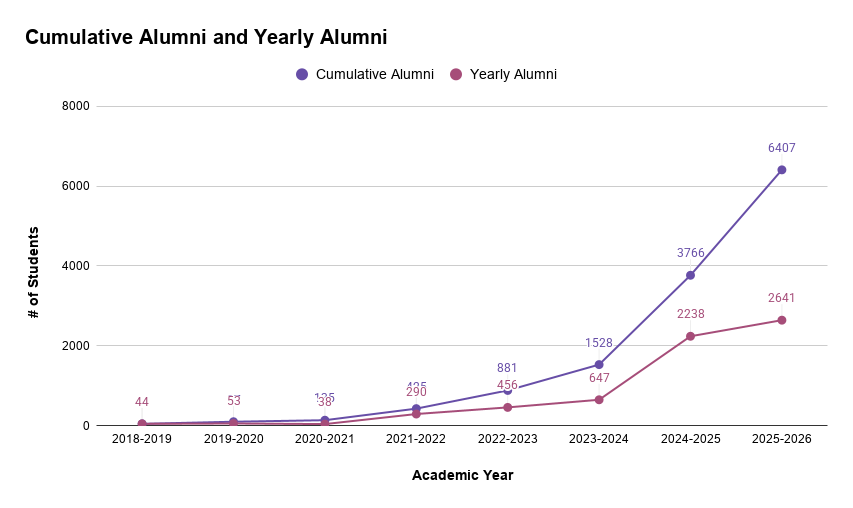
As clinics proliferate around the world, they are training a steadily growing number of students: 51 clinics trained 2,641 students during the 2025–2026 academic year—more than four times the total from just two years prior, growing the cumulative total of clinic alumni by 70%.
Impact Spotlight: A Bridge Between Graduate Study, Community Service, and Professional Practice

When Avi Martin was a student at San Diego State University and participating in the San Diego Cyber Clinic, he worked on a project to raise awareness about scams among senior citizens—a critical challenge, as adults age 60 and older filed more than 201,000 complaints in 2025, with reported losses exceeding $7.7 billion, according to the FBI’s Internet Crime Complaint Center (IC3) 2025 Internet Crime Report.
“My experience with the San Diego Cyber Clinic showed me how valuable cybersecurity education can be when it is practical, accessible, and connected to real community needs,” Martin says. “While leading the scam-awareness project, I worked with the team to translate evolving fraud tactics into clear, usable guidance for older adults.
The most meaningful part of the experience was seeing how open conversation, relatable examples, and thoughtful questions could make cybersecurity feel less intimidating and give community members greater confidence when responding to suspicious calls, messages, and requests.”
Since that experience, Avi has graduated with a master’s degree and moved into full-time cybersecurity work. “That progression feels full circle because the same skills emphasized by the clinic, particularly clear communication, audience awareness, and turning technical information into practical action, continue to shape how I approach security today,” he says. “The clinic provided an important bridge between graduate study, community service, and professional practice while demonstrating the broader value of student-led cyber clinics in addressing real-world needs.”
Closing the Defense Gap for Community Organizations
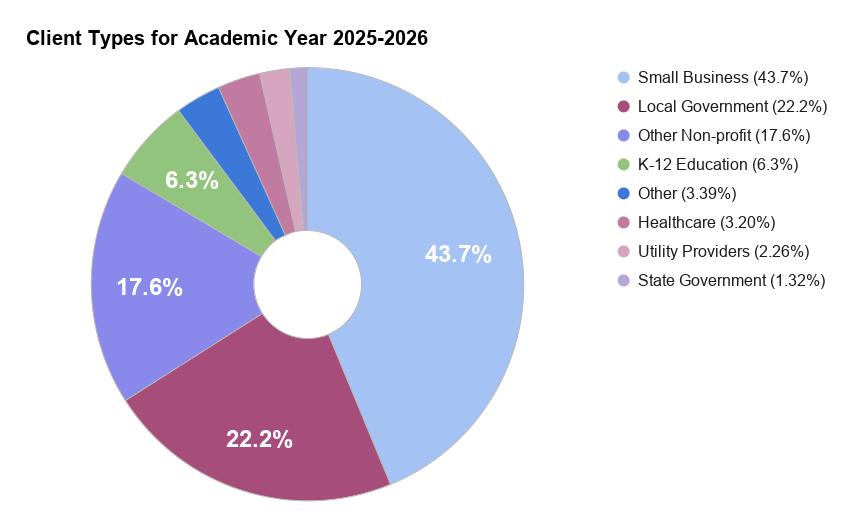
Cybersecurity clinics provide valuable pro bono services for under-resourced community organizations, non-profits, small businesses, local governments, K-12 schools, and critical infrastructure. Clinics support organizations with foundational services like risk assessments, policy development, and training that they would otherwise struggle to access.
In the last academic year, the 51 member clinics that provided data told us that they had collectively supported nearly 1,900 community organizations. Clinics support a wide range of community organizations, including small businesses (43.7 percent), local governments (22.2 percent), nonprofits (17.6 percent), and K-12 schools (6.3 percent).
Impact Story: Supporting K-12 Schools
Cybersecurity clinics work with a wide range of organizations that provide essential services for communities, including K-12 schools. These services are urgently needed: in 2025, ransomware gangs took credit for 251 cyberattacks on schools, universities, and other educational institutions, resulting in the breach of over 3.96 million records, according to Comparitech.
Last year, a team of students from the Metropolitan State Cyber Clinic conducted a cybersecurity risk assessment for Rockford Area Schools, a rural school district in Minnesota with roughly 1,600 students. “The team was well-prepared, highly knowledgeable, and delivered clear, actionable insights that will help strengthen our security posture,” says Jeff Kienitz, Director of Technology Services, Rockford Area Schools. “We appreciate the meaningful recommendations and the collaborative approach throughout the process.”
Students at the Cyberspace Operations Research and Education (CORE) Center, a cybersecurity clinic at the University of Arkansas at Little Rock, worked with the Trumann School District. “Working with the CORE Center has been an incredible asset to our district,” says Mac McCaa, Director of Technology. “I hope more institutions recognize how deeply beneficial this partnership can be to their operations.”

Photo by Benjamin Krain.
An Expanding Global Network
The cybersecurity clinic model has continued to spread to colleges and universities across the globe. In addition to a wave of recent growth in the Asia Pacific region (thanks to support from the APAC Cybersecurity Fund), we celebrated the first clinic in Latin America, at Pontifical Catholic University of Peru (PUCP).
New Funding Streams
As in past years, industry leaders have continued to play a major role in supporting the growth of cybersecurity clinics.
- Google.org’s total investment in cybersecurity clinics now exceeds $36 million. (Read Google’s report, “Google.org’s Cybersecurity Clinics Fund 2026 Impact Report: Investing in America’s Cybersecurity Infrastructure.”)
- Okta For Good’s contribution supported the launch of Catalyst Cyber Clinic, Canada’s first cybersecurity clinic, at Toronto Metropolitan’s Rogers Cybersecure Catalyst.
- Craig Newmark Philanthropies provided endowment gifts to establish clinics at New York University and St. John’s University.
The past year also saw an exciting development in the funding landscape, as state governments made direct investments in cybersecurity clinics. In February, Maryland Governor Wes Moore announced an investment of $4 million in grant funding to support three cyber and AI clinics through the Cyber Maryland Program. Through the initiative, about 600 Marylanders will gain digital security training and firsthand experience supporting dozens of schools, hospitals, nonprofits, small businesses, and other institutions across the state.
Other examples of government-funded support for clinics emerged in the U.S. across a wide range of funding tiers. For example, the U.S. National Science Foundation granted nearly $500,000 to South Texas College to launch a cybersecurity clinic; UNLV received a $650,000 award from the Small Business Administration and a $2 million grant from the National Security Agency; and the National Institute of Standards and Technology (NIST) awarded $100,000 to Ohio University to enhance its cybersecurity curriculum with clinical education.
Impact Highlight: From Clinics to Careers
The Catalyst Cyber Clinic, the first cybersecurity clinic of its kind in Canada, was designed to strengthen Canada’s most vulnerable non-profit organizations by pairing emerging cyber talent with real-world needs.

“This program has genuinely changed the direction of my career,” one of the participants said. “I landed a contract role in November 2025, and after completing the Clinic, I was offered a full-time position at the same organization. I want to be clear about this: I got this job because of the Clinic.” Read more about the Catalyst Cyber Clinic here.
Looking Ahead
The Consortium is proud of the growing impact achieved by the hardworking, mission-driven clinics around the world. While these metrics provide just a high-level snapshot of what our community has accomplished in year five, we have already turned our focus toward how we can deepen and sustain this momentum in 2027 and beyond:
- Innovating Clinical Curricula and Service Frameworks: The Franklin Cummings Tech Cybersecurity Clinic at Benjamin Franklin Cummings Institute of Technology is developing a robust curriculum tailored to meet the needs of clinic students and faculty at two-year colleges. This will significantly lower the barriers for other two-year colleges that want to establish a clinic of their own.
In the 2026–27 Academic Year, member clinics at UNC Charlotte and the Claremont Graduate Colleges are piloting the Consortium’s new AI risk management curricula and assessment framework to test and strengthen the resources before they are adopted community-wide. - Deepening Our Understanding of Impact: Members across the community are expanding efforts to understand the clinic outcomes for students and clients beyond tracking the number of students and clients reached. Ongoing research led by Patricia Vargas-Leon, Postdoctoral Scholar at Indiana University, examines how clinics transform student career trajectories and build lasting cyber resilience for their clients. Vargas-Leon aims to publish findings from her research in 2027.
- The Consortium as a Community of Practice: As our network grows, we are bringing more evidence-based community-of-practice approaches to bear to ensure clinics have the tools, peer learning, and operational resources needed to thrive.
We would like to offer special thanks to the Consortium’s funders, without whom this early vision and growth would not have been possible, including: The William and Flora Hewlett Foundation Cyber Initiative, Craig Newmark Philanthropies, New America’s Public Interest Technology University Network (PIT-UN), Fidelity Charitable’s Catalyst Fund, Okta, and, in particular, Google.org for their transformational investment in 25 cybersecurity clinics before 2025, and for additional investment in expanding clinics worldwide.
To sustain and grow this work, clinics rely on both institutional support and philanthropy. We invite you to learn more and support our work.
Together, we can fulfill our founding vision of a cybersecurity clinic in every U.S. state by 2030, and continue to grow the impact of the cybersecurity clinic model worldwide.